
The Best Maria Tallchief Quarters for Your Collection
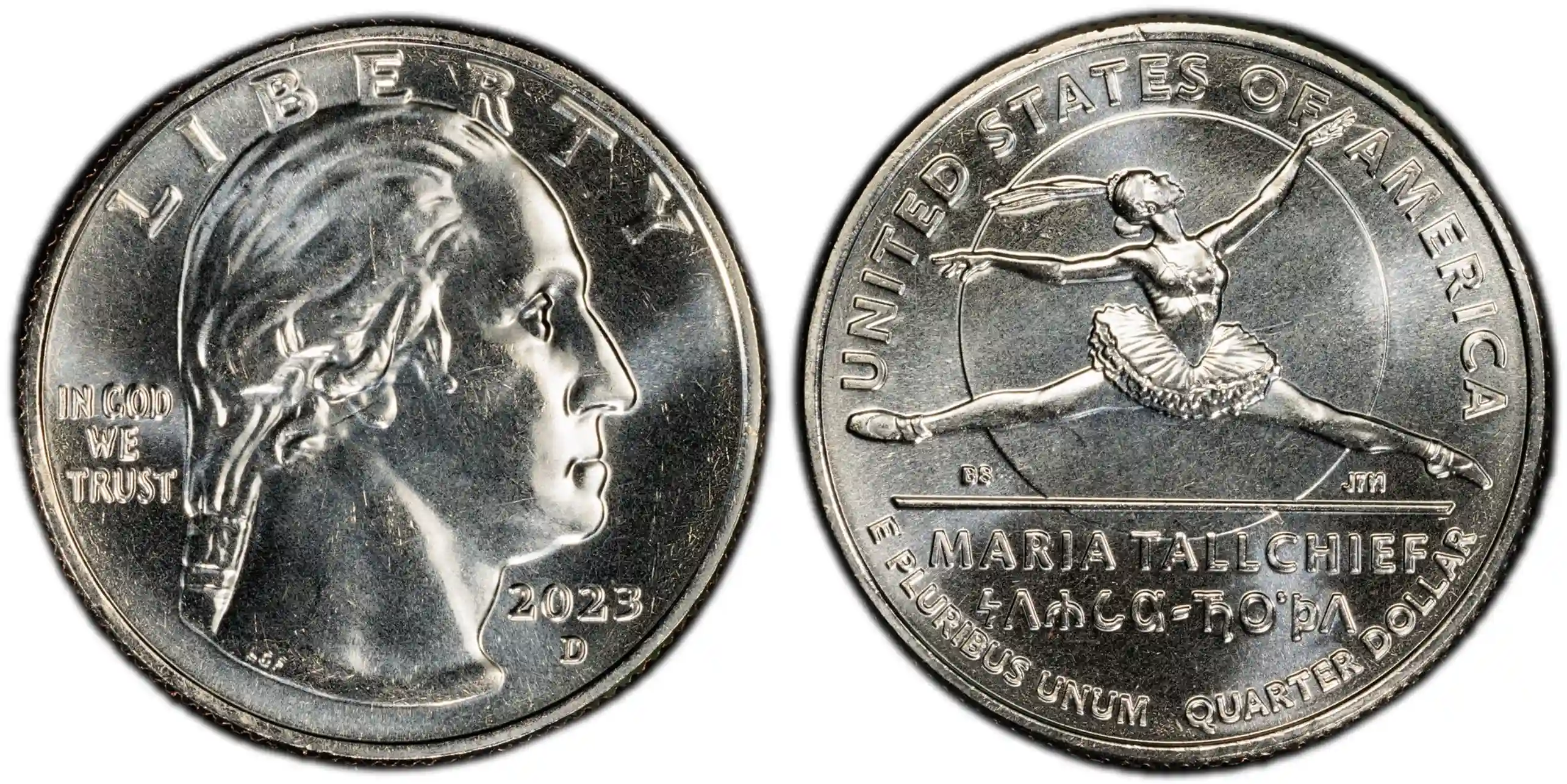
The high Mint State issues and proof coins are top among the Maria Tallchief quarters, and their value increases from 1/4 of a dollar to $50 or more.
Item Overview
Year | 2023 |
Diameter | 24.26 mm |
Weight | 5.67 g |
Composition | Copper/Nickel |
The United States Mint utilized three main production facilities to manufacture the 2023 Maria Tallchief quarter. Each branch serves a specific purpose, which dictates the total mintage numbers and the distribution methods for the coins.
Philadelphia & Denver Issues
The bulk of the production relies on the Philadelphia and Denver facilities. Together, these two powerhouses struck a massive combined total of 370 million pieces for daily commerce.
Mint | Strike Purpose | Mintage |
Philadelphia P Mint Mark | Business / Circulation | 185,800,000 |
Denver D Mint Mark | Business / Circulation | 184,800,000 |
Heavy machinery dumps millions of quarters into large steel bins, where coins crash against one another. This violent process leaves scratches and gouges. Finding a Mint State 67 or higher piece out of bank rolls or pocket change requires patience and careful inspection under magnification.
San Francisco Proofs and Limited Editions
The San Francisco Mint operates under an entirely different strategy. This facility did not release any Maria Tallchief quarters into general circulation channels. Collectors can only obtain S mint mark quarters through official packaging from the United States Mint.
The San Francisco Mint produced three distinct types for this release:
Circulating Finish Proofs – these coins feature business-strike finishes but come inside special collector rolls and three-roll sets.
Standard Clad Proofs – these coins display a brilliant contrast with frosted details on a reflective background, sold inside annual proof sets.
Silver Proofs – these pieces feature a composition of 99.9 % fine silver, striking an immediate chord with precious metal collectors.
The Top Maria Tallchief Condition Rarities to Target
Modern clad coin values depend completely on third-party grading certifications. Professional companies like PCGS and NGC evaluate quarters using a numeric scale from 1 to 70.
Mint State MS-67 & MS-68
Uncirculated quarters suffer from bag marks, which form when fresh coins strike each other during packaging. The cheek of George Washington on the obverse and the smooth fields around Tallchief’s legs on the reverse are highly vulnerable to these marks.
Grade | Value |
Raw Quarter | $0.25 |
Mint State 65 | $1–$3 |
Mint State 67 | $20–$50 |
Mint State 68 | $100–$200+ |
Deep Cameo Proofs
Proof coins require specialized treatment. Mint workers polish the steel coin dies until the flat areas shine like mirrors. Then, they treat the recessed details with acid or lasers to create a frosted, matte appearance. When the die strikes a polished blank, the result is a Deep Cameo proof.
Visual Highlights – the mirror fields look deep and black under direct light, while Maria Tallchief appears stark white, almost like a cameo cameo profile carving.
Grading Standards – Proof coins start at Proof 60 and run up to Proof 70. Only coins with perfect frost-to-field contrast receive the DCAM or Ultra Cameo designation.
Target Grade – seek Proof 70 DCAM specimens. Even a tiny hairline scratch drops the grade to Proof 69, which lowers the value by half.
Valuable Maria Tallchief Quarter Errors and Varieties
Error | Affected Side | Cause of Flaw | Value |
Extra Feather | Reverse | Die Chip | $10–$80+ |
Broken Arm | Reverse | Die Crack | $25–$300 |
In Cod We Trust | Obverse | Grease-Filled Die | $5–$20 |
Shawl Fabric Chips | Reverse | Die Deterioration | $5–$15 |
Misaligned / Off-Center Strike | Both | Planchet Feed Misalignment | $75–$200+ |
Clipped Planchet | Both | Blanking Press Error | $30–$100+ |
The Die Chip is a small piece of the steel die that breaks away under high pressure, allowing liquid-like metal to pool into the void. Die Crack is a structural stress that causes a fracture line to propagate outward across the face of the die face over time.
Grease-Filled Die is an industrial lubricant, and debris clogs the fine detailing of the letter, preventing the metal from flowing into the slot. Die Deterioration is a heavy wear that causes tiny chunks of the metal fields to crumble away around high-detail, deep engravings.
Planchet Feed Misalignment is when the automated mechanical arms drop the blank coin off-center inside the striking chamber. Blanking Press Error is the heavy punch overlaps a previously cut section of the massive sheet-metal feed line.
How to Smartly Collect and Store Your Quarters
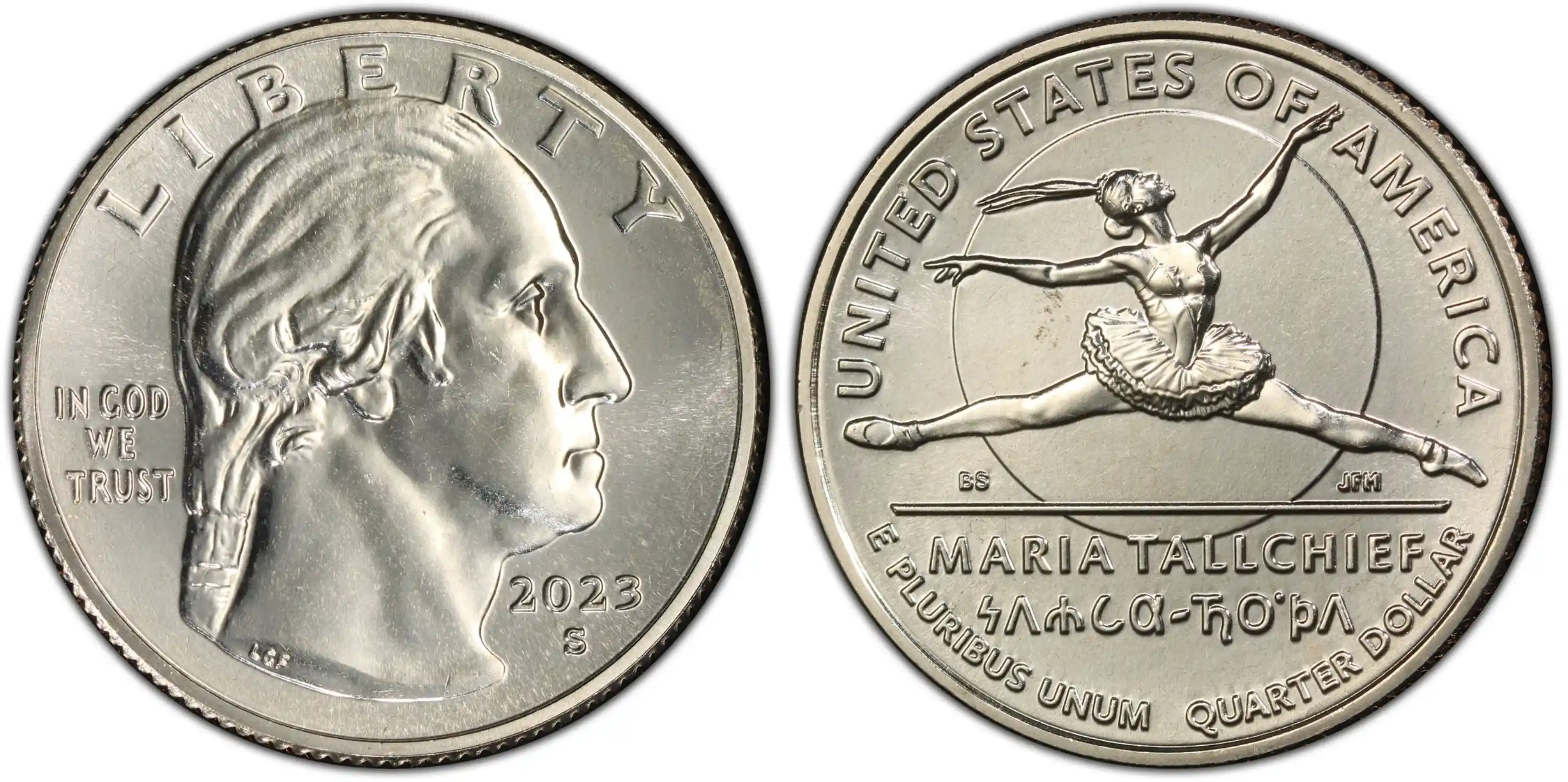
Amassing a collection of modern quarters requires strategic buying and defensive preservation tactics. Because copper, nickel, and silver react to environmental factors, proper care keeps your investments safe.
Sourcing from Unopened U.S. Mint Rolls vs. Secondary Markets
Collectors have two distinct pathways to acquire high-grade material. Each method has its own costs and benefits.
Method A – Cherrypicking Mint Rolls:
Low Initial Cost
High Time Investment
Risk of Low Grades
Method B – Buying Certified Slabs:
High Initial Cost
Zero Time Investment
Guaranteed Grade
Buying original $10 bank rolls directly from the United States Mint or local banks allows you to "cherrypick" the coins yourself. You pay face value or a small mint premium to search through dozens of fresh coins.
This method offers the thrill of discovery, but most coins will carry bag marks. Buying pre-certified coins from major auction houses eliminates the risk, but you must pay full market premium up front.
Protecting Modern Clad and Silver Surfaces from Tarnish
Human skin contains natural oils, acids, and moisture that can easily destroy the pristine surface of an uncirculated coin. Touching a fresh quarter with bare fingers leaves invisible deposits that eventually oxidize into ugly dark spots, ruining any chance at a high grade.
To safeguard your collection:
Handle all raw quarters strictly by their edges using clean cotton gloves or plastic-tipped tweezers.
Avoid PVC plastic flips, as PVC breaks down over time into a green, corrosive slime that permanently etches metal.
Store coins inside archival-safe Mylar flips or air-tight hard plastic capsules.
Place finished coin containers inside a cool, dark environment equipped with silica gel packs to absorb ambient humidity.