
What Determines the Value of a 100 Yen Coin Beyond Face Value
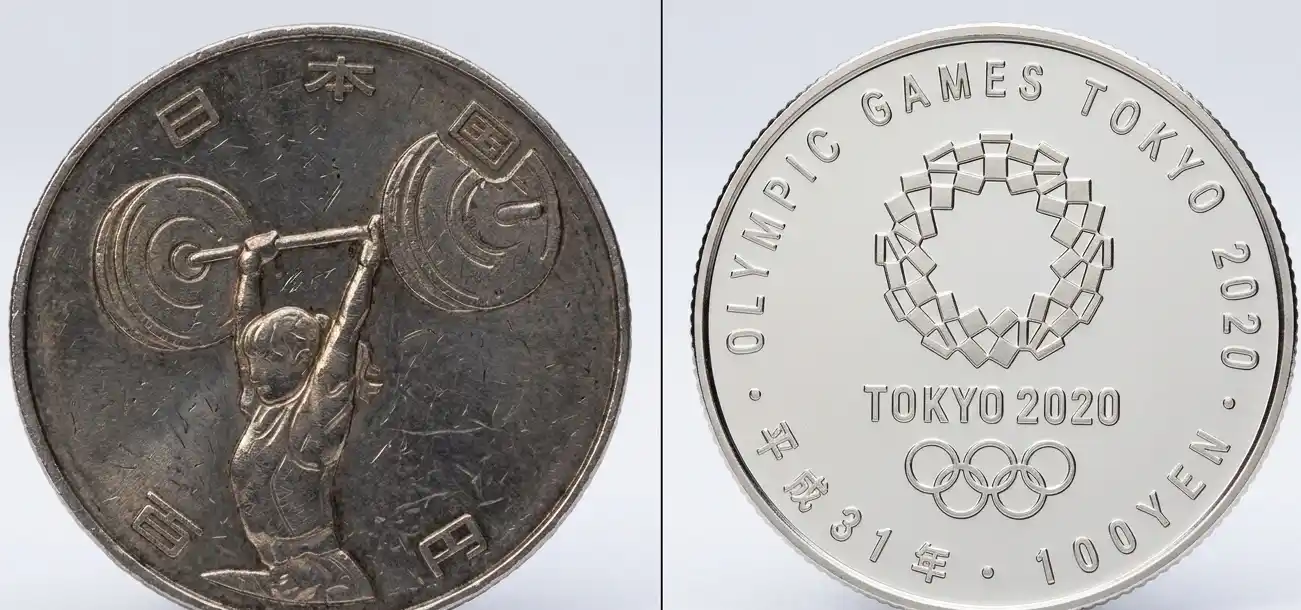
Most specimens remain ordinary — but a few gain unexpected attention.
Japan’s monetary landscape in 2026 continues to rely heavily on physical currency for daily micro-transactions.
Vending machine culture and retail habits keep the 100 Yen coin at the center of the economy.
Market 100 Yen coin value for standard issues rarely exceeds the 100 ¥ mark.
Standard Category | Specification Detail |
Item Mass | 4.80 grams |
Exterior Diameter | 22.60 mm |
Metal Mix | Copper and Nickel |
Copper Content | 75% |
Nickel Content | 25% |
Rim Design | Reeded |
Maintaining the 4.80-gram mass is mandatory for passing electromagnetic sensors in ticket machines.
Choosing a Copper and Nickel blend provides the necessary hardness to resist environmental damage.
Coins losing more than 0.15 grams of mass through wear are systematically removed from circulation in 2026.
Rarity Driven by Mint Year and Production Volume
Annual mintage figures linked to the Emperor's reign serve as the primary indicator of scarcity.
Lower production volumes naturally create a deficit within the cash cycle.
Historical production patterns show distinct phases of availability:
Showa Era (1926–1989)
Production of Silver-based coins known as Phoenix and Rice types. Massive volumes were struck during the 1960s economic boom.
Heisei Era (1989–2019)
Gradual decline in physical coin demand during the early 2000s. Record low mintages occurred in 2001 and 2002.
Reiwa Era (2019–Present)
Introduction of new dies featuring the current reign name. Reiwa coins now represent approximately 32% of all 100 Yen pieces in 2026.
Scarce issues like Heisei Year 13 remain the most sought-after items in modern circulation.
Current Market Pricing for Rare Dates (April 2026)
Auction data from Tokyo and Osaka indicates steady volatility for high-grade specimens.
Condition remains the deciding factor when calculating the final premium.
Year | 2026 Market Value | Annual Change |
Showa 33 (1958) — Silver | 3,250 ¥ | +14% |
Showa 36 (1961) — Silver | 1,900 ¥ | +9% |
Heisei 13 (2001) | 980 ¥ | +18% |
Heisei 14 (2002) | 850 ¥ | +12% |
Reiwa 5 (2023) | 480 ¥ | +5% |
Rising prices for 2001 coins result from large-scale hoarding by professional dealers.
Finding a 2001 specimen in daily pocket change is now a 1 in 4,500 event in 2026.
Metal Composition and Intrinsic Worth
Silver content in early series provides a baseline investment floor for collectors.
Prior to 1967, the Japan Mint utilized Silver as a primary material.
→ Phoenix Type (1957–1958): 60% Silver content → Rice Type (1959–1966): 60% Silver content → Transition to Copper-Nickel (1967): Zero Silver content
Each old-style coin contains exactly 2.88 grams of pure Silver.
Calculated at 135 ¥ per gram of Silver in April 2026, the metal value alone reaches 388.80 ¥.
Collector premiums for perfect preservation add another 200% to 500% to this base metal cost.
Modern Copper-Nickel issues rely entirely on rarity rather than metal value for their price growth.
Categorizing Minting Errors and Production Flaws
Manufacturing glitches transform a standard 100 Yen piece into a unique treasure.
Rigid quality checks at the Osaka Mint make these errors extremely difficult to find.
Off-Center Strike
Misalignment of the design relative to the coin blank. 10% shift increases value to 15,000 ¥. 50% shift creates a 140,000 ¥ price tag in 2026.
Double Strike
Repeating the design on the same blank twice. Visible overlapping of the Sakura petals generates high auction interest.
Brockage
A coin sticking to the die and striking the next blank with its own image. Confirmed authentic cases sell for over 300,000 ¥ in private auctions.
Wrong Planchet Error
Striking the 100 Yen design on a blank intended for a 10 Yen or 50 Yen coin. Weight variance from the 4.80-gram standard proves authenticity.
Identifying such defects requires a coin identifier app, a 10x magnification lens, and precision digital scales.
Condition Grading and Preservation Scale
International grading standards are now the norm in the 2026 Japanese market.
Surface quality determines the specific price bracket for every coin.
Proof Finish
Mirrored backgrounds and frosted relief details. Sold in limited sets directly to the public.
Uncirculated
Coins showing zero signs of wear and original Mint luster. Minor contact marks from storage bags are acceptable.
Circulated
Visible wear on the high points of the Sakura blossoms. Darkening of the Copper-Nickel alloy from handling.
Sheldon Scale Grade | Physical Description | Price Multiplier |
MS60-MS63 | Standard luster, visible marks | 1.0x |
MS64-MS65 | Sharp strike, minimal flaws | 2.5x |
MS66-MS67 | Exceptional preservation | 10.0x |
MS68+ | Museum quality | Individual bid |
Certification by PCGS or NGC is mandatory for high-value transactions.
Average grading fees in Tokyo sit at approximately 6,800 ¥ per coin in 2026.
Impact of Commemorative Issues
Japan frequently releases special 100 Yen coins to mark historical events.
These remain legal tender but are quickly removed from circulation by the public.
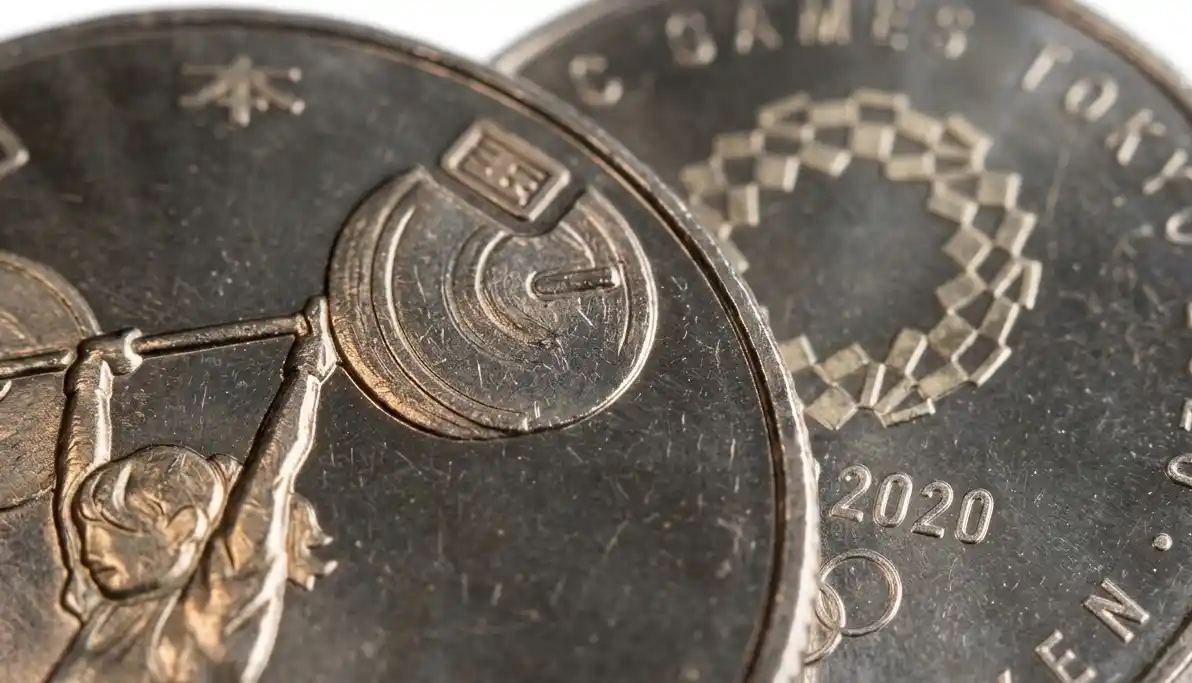
→ 1964 Tokyo Olympics First commemorative coin of this denomination. Mintage of 80,000,000 units keeps prices affordable.
→ Shinkansen 50th Anniversary Series featuring different bullet train designs. Full sets of 9 coins trade for 5,200 ¥ in 2026.
→ Osaka World Expo Designs celebrating international cooperation. Artistic complexity dictates the final secondary market price.
Commemorative coins represent less than 0.05% of the total 100 Yen volume in circulation.
Storage and Logistics: Roll and Box Metrics
Professional handling preserves the Copper-Nickel surface from environmental oxidation.
Bank packaging protects coins until they reach the end user.
Paper Roll Holds 50 coins. Total mass equals 240.00 grams excluding the paper. Official Bank of Japan seals confirm UNC status.
Mint Box Contains 50 rolls for a total face value of 250,000 ¥. Net weight totals 12.00 kilograms.
Investing in sealed rolls from rare years is a popular conservative strategy in 2026.
Finding a single high-grade coin within a 2001 roll can triple the investment value.
Coinage Evolution in the Reiwa Era
Design elements remain consistent since 2019, with changes limited to the date characters.
Production statistics show adaptation to the growing digital economy.
Reiwa Year | Calendar Year | Output Level | Scarcity Status |
Year 1 | 2019 | High | Common |
Year 2 | 2020 | Medium | Common |
Year 3 | 2021 | Medium | Common |
Year 4 | 2022 | Low | Emerging Interest |
Year 5 | 2023 | Restricted | Rare/Collector |
Upgraded steel dies with longer life cycles are now in use at the Mint in 2026.
Better detail in the Sakura petals is a direct result of this technological improvement.
Factors That Destroy Value
Deviations do not always lead to higher prices.
Certain defects make a 100 Yen coin unmarketable.
Chemical Cleaning
Using harsh acids to remove patina destroys the original Mint luster. Cleaned coins lose up to 70% of their numismatic value.
Physical Scratches
Deep marks from high-speed counting machines. Edge dents from accidental drops on concrete.
Fake Patina
Applying heat to modern coins to simulate age. Specialists detect this easily via surface spectrum analysis.
Organic Contamination
Fingerprint oils causing permanent corrosion on the Nickel layer.
Collectors in 2026 prioritize "raw" coins that show natural aging over cleaned specimens.
Verification and Counterfeit Detection
High prices for rarities encourage the production of sophisticated fakes.
Detection tools are now accessible for amateur collectors:
→ Digital Mass
Check Weights must not vary by more than 0.02 grams from the 4.80-gram standard.
→ Acoustic Resonance
Copper-Nickel produces a specific high-frequency tone when tapped.
→ Microscopic Review
Authentic Sakura petals show fine lines that fakes cannot replicate.
→ Conductivity Testing
Handheld devices distinguish authentic alloys from plated steel.
Using a smartphone with a macro lens for the free coin identifier and value app in 2026 allows for a 90% accuracy rate in spotting fakes.